Monday, 9 June 2014

Sony Xperia T2 Ultra review: The bigger, the better

From the company that's trying to have a smartphone for every pocket, taste, need and skill level - and is pretty much there in just a couple of generations - a midrange phablet should be anything but a surprise. The Sony Xperia T2 Ultra is only the second member of the Ultra lineup, trying to deliver the Xperia Z Ultra experience on a tighter budget. With hardly a manufacturer left that hasn't crossed the 6" boundary, Sony could definitely use a reinforcement to its phablet range.
Sony Xperia T2 Ultra Sony Xperia T2 Ultra Sony Xperia T2 Ultra 

Sony Xperia T2 Ultra official pictures
The Xperia T2 Ultra, being a phablet, comes with a massive 6" IPS display of 720p resolution. A typical midranger, it is powered by the ubiquitous Snapdragon 400 chipset with four Cortex-A7 cores. In a pleasant turn of events, the Xperia T2 Ultra offers a better camera than its premium Z Ultra sibling - a 13MP Exmor RS sensor this time around, complete with a LED flash too. Nice!
So, a superior camera and a LED flash are welcome on a device that's easier to handle - the Xperia Z Ultra was just shy of a tablet and these aren't exactly a photographer's first choice. Another thing that looks good about the T2, at least on paper, is the battery. Almost the exact same capacity as what the Z Ultra has, the 3,000mAh unit is powering a smaller screen this time around and of lower resolution. Sounds like better battery life - and we'll be curious to test.
But that will come in due time, now let's look closer at the Sony Xperia T2 Ultra's full specs.

Key Features

  • Quad-band GSM/GPRS/EDGE support; 3G with 42Mbps HSPA; 150Mbps LTE
  • Optional Dual SIM
  • 6.0" 16M-color 720p capacitive IPS Triluminos display (245ppi pixel density); Mobile BRAVIA engine 2
  • Android OS v4.3 Jelly Bean with custom UI, confirmed for KitKat update
  • Quad-core 1.4GHz Cortex-A7 CPU, Adreno 305 GPU, 1GB RAM; Qualcomm Snapdragon 400 chipset
  • 13MP autofocus camera with geo-tagging, HDR
  • 1080p video recording @ 30fps, continuous autofocus and stereo sound
  • 1.1MP front-facing camera, 720p video recording
  • Wi-Fi a/b/g/n/ac, Wi-Fi Direct and DLNA; Wireless TV out
  • GPS with A-GPS, GLONASS
  • 8GB of built-in storage; microSD card slot
  • MHL-enabled microUSB port
  • Bluetooth v4.0
  • NFC
  • Standard 3.5 mm audio jack
  • Accelerometer and proximity sensor
  • Active noise cancellation with dedicated mic
  • Ample 3000 mAh battery

Main disadvantages

  • Not as slim as the Z Ultra
  • Non user-replaceable battery
  • No water or dust proofing
  • No proper video and audio playback decoders (DivX, AC3) out of the box
  • Relatively quiet audio output in the headphones
If you are interested in the Xperia T2 Ultra, you are not worried about size and weight - and you are probably just in it for the screen diagonal. The T2 is a little easier to handle than the 6.4" Z Ultra but it hasn't lost the that premium feel due to the added fat around the waistline. On the outside, the device looks almost the same as the Z Ultra but the dust and water protection are gone.
Getting a video player to suit your taste and needs off the Play Store has always been an option if the default app doesn't cut it, but it's a shame really to see effort wasted. Poor codec support has almost ruined the otherwise quite feature-rich Movies app.
Sony Xperia T2 Ultra Sony Xperia T2 Ultra Sony Xperia T2 Ultra 

Samsung Galaxy S5 vs Sony Xperia Z2 Droid gladiators

The flagship Android segment has always been a battlefield but you wouldn't want to be around when these two are in their most violent mood. The Samsung Galaxy S5 and Sony Xperia Z2 are two of the most advanced smartphones to ever sit on a store shelf. Both make big claims regarding screens and cameras (staples for both companies) and brag about practically each of their features. And to say that it's a long list would be a massive understatement.

Samsung Galaxy S5 vs. Sony Xperia Z2

Samsung is in its prime, in large part due to the enormous commercial success of its phones. Sony is ailing and cutting off businesses to focus more tightly on its core competencies, especially smartphones. The outcome of this matchup will have a great impact on the fates of the two tech giants.
Here's a quick blow by blow of where each phone bests its opponent. Keep in mind those differences are on paper only and the advantage might shift from one side to the other in the actual tests.

Galaxy S5 over Xperia Z2

  • Screen with great color accuracy, better sunlight legibility
  • Higher CPU clockspeed - 2.5GHz vs. 2.3GHz
  • More compact, lighter
  • Faster phase-detection autofocus (just 0.3s to lock)
  • Fingerprint scanner, PayPal certified
  • Heart rate sensor
  • IR blaster
  • Better ingress protection - IP67, dust tight
  • Faster USB - v3.0 vs. v2.0
  • 32GB of built-in storage is an option

Xperia Z2 over Galaxy S5

  • Bigger, higher resolution camera sensor - 1/2.3" 20.7MP vs. 1/2.6" 16MP
  • Higher water resistance level - IP58, immersion beyond 1m
  • More RAM - 3GB vs. 2GB
  • Stereo speakers
  • Slightly bigger screen - 5.2" vs. 5.1"
  • Bigger battery - 3,200mAh vs. 2,800mAh
  • Newer MHL version - 3.0 vs. 2.1
Sony and Samsung are competing in the camera market - from point-and-shoot through mirrorless to DSLR - so of course they put their own sensors in their flagship phones. Smartphones have been outselling traditional cameras for years now.
The two companies are also among the biggest TV makers and some of the biggest display makers for screens big and small. You can bet your bottom dollar their flagship phones are going to serve as a promotion of the two respective screen business.
Sony made water resistance a trademark for the flagship Xperia devices, but this year Samsung jumped on it too after dabbling with Xcover and Active devices.
Samsung Galaxy S5 vs. Sony Xperia Z2 Samsung Galaxy S5 vs. Sony Xperia Z2 Samsung Galaxy S5 vs. Sony Xperia Z2 Samsung Galaxy S5 vs. Sony Xperia Z2
Samsung Galaxy S5 and Sony Xperia Z2, ready to face off
One way or another, flagship smartphones have become the calling cards, pocket-sized posters of the companies that make them. With good reason too, no other digital segment sells in the hundreds of millions units and keeps growing year after year. In fact, cameras, TVs even computers are in decline.
So it should come as no surprise that the two tech giants are putting on their Sunday best for the two flagships - that means the best screen, camera, chipset and other goodies they could get their hands on, plus the best design they could dream up.

LG G3 review

Introduction

Late as usual but ever so strong. In an industry where timing is almost as important as quality, LG's highly anticipated G3 flagship makes landfall in the second half of 2014, a couple of months after the flagships of the other major players. Such a late release could mean LG is dangerously close to missing the last train into buyers' pockets, especially if they are already filled with Samsung Galaxy S5's and Sony Xperia Z2's.
But perhaps that's not quite the sentiment we should approach the LG G3 with. The extra time has given LG's engineers more opportunities to perfect the hardware and offer software features not found in other top flagships. More screen and even less bezel, with resolution to spare - the QHD display, along with a laser autofocus camera could be the right trump cards to play so late in the game.

LG G3 official photos
Winning the QHD arms race rates differently depending on who you ask (Oppo did announce its Find 7flagship, but the G3 is first to the market), so it really comes down to whether or not the LG G3 brings enough to the table to make up for the late start. We've got an entire review ahead of us to see if that's the case, but for now let's take a closer look at the key features and potential deal breakers.

Key features

  • 5.5" QHD (1440 x 2560px) TrueHD-IPS LCD, 534ppi, Gorilla Glass 3
  • Android 4.4.2 KitKat with the latest Optimus UI v
  • Qualcomm Snapdragon 801 chipset with quad-core 2.5GHz Krait 400 processor, Adreno 330 GPU and 2GB/3GB of RAM
  • 13MP camera, phase detection/laser autofocus, dual-LED (dual tone) flash, OIS, 2160p video recording
  • 2.1MP front-facing camera, 1080p video recording
  • 16GB/32GB of built-in storage, expandable via a microSD card slot
  • Active noise cancellation with a secondary microphone
  • Dolby mobile sound enhancement
  • 3,000mAh user-replaceable battery
  • Proprietary back panel control deck
  • IR-port and NFC

Main disadvantages

  • No IP-certified dust or water resistance
  • No microUSB 3.0 port
LG has thrown everything and the kitchen sink into their latest flagship, making it one of its most robust offerings to date. Expandable storage and a user-accessible battery are finally on the asset side of the balance sheet. That leaves us with a single major omission, dust and water resistance, which can be found in flagships from competing Sony and Samsung. LG has its reasoning for choosing to forego this - something we'll get to in more detail as the review unfolds.
Most importantly, the design team did splendidly in keeping the bezels on the 5.5-inch screen to a minimum, and kudos to them for that. Nevertheless, it's still a 5.5" device that stretches a bit beyond LG's previous G2 flagship, which we loved so much. The good news is, LG has had plenty of time to optimize one-handed operation with its G Pro series of devices (the first of which is also a 5.5-incher), so usability on the big screen likely won't be a huge issue.
LG G3 LG G3 LG G3 LG G3
LG G3 from our studio
Up next we'll dive right in to the hardware features of the LG G3, including a look at its design aesthetics, handling, and layout of controls.

Apple iPhone 6 rear panel leaks out of China review

The iPhone 6 has been popping up in the rumor mill quite a bit recently. Quite curiously the China-based Apple manufacturer Foxconn revealed that it will be manufacturing both 4.7-inch and 5.5-inch models of the upcoming Apple flagship, just hours before their recent WWDC conference.
Now, another leak out of China shows off the rear panel of the 4.7" model yet again, this time with a cut-out apple logo.
   

Apple has traditionally shied away using a cutout logo on its smartphones, relying on one melded into the surface of the device instead. Now it's hypothesized that the iPad-esque cutout section could even be illuminated, and possibly used for notification alerts as well. This last bit is unlikely, however, as on the latest iPad mini the cutout logo does not illuminate, and is instead used to overcome the shielding effect the metal casing had on the internal antenna.
Side views reveal the familiar standard mute and elongated volume buttons on the left side, accompanied by a SIM tray slot and power/lock button on the right. The latter has been moved to the bottom half of the panel to allegedly make it more accessible due to the larger footprint mandated by the new 4.7-inch screen.
This latest leak coincides with previous glimpses of the iPhone 6, so it looks like the larger-screened iPhone may finally be a reality. Expect even more on the iPhone 6 - and whatever screen variants it will have - as the alleged September launch date nears.

Moto X 64GB goes official, available on Try Then Buy Review

Motorola launched a very interesting Try Then Buy campaign for the Moto X two days ago. You can fully customize a Moto X of your liking, deposit just a penny and try it at home for two weeks. If you like it, then you can keep it and Motorola will charge your card after the trial period is over. Otherwise you can return it back to Motorola and pay nothing.
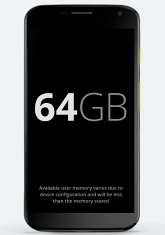
As of today the Moto Maker website is also offering a 64GB flavor of the Moto X. It costs $50 more than the 32GB model and a good $100 over the default 16GB one. You can have it on Try Then Buy for $0.01 too.
It seems Motorola is emptying its Moto X stock in preparation for the arrival of the upcoming Moto X+1. The new device has been teased numerous times before and is expected to be from the flagship kind. Motorola will try to keep its pure Android
policy, but we are yet to see if Lenovo, Motorola's new owner, wants the same or not.
                                              Source | Via

Google tweet shows an unknown new phone Review


The Android Twitter account posted an image to brag about how awesome Google Now is, but there's something odd about the phone in the image. It's not a Nexus 5, not even one of the Moto phones, and it lacks any
branding.
Since this is the Internet, speculation instantly started flying around that this is the Nexus 6 or the Moto X+1. The Motorola Moto X+1 recently leaked via a 1080p screenshot, but as Motorola is departing Google for Lenovo, cross promotion from the search giant is less likely.
This could also be Android Silver – the replacement of the Nexus line, the first device of which will be manufactured by LG. If you'll recall, LG made the last two Nexus phones so it's a good pick.
The final (and very likely) option is that this is an image of a generic "phone" as the tweet wants to promote Google's search prowess, available on any smartphone.

Sony waterproof smartphone Xperia ZR Review


nexusae0_23_Xperia_ZR-11Sony has announced the younger sibling to the Xperia Z: the Xperia ZR. The Xperia ZR includes many of the Z’s features in a smaller, more compact design.
Just like the Xperia Z, the Xperia ZR is waterproof and dust-resistant. This
time, Sony is not just advertising the fact that the Xperia ZR can survive underwater but that you can actually use it there, particularly for taking 13 megapixel pictures and full HD videos with the camera and dedicated shutter button.
The Xperia ZR has a 4.55-inch, 1280 x 720 resolution LCD. Sony is using its BRAVIA Engine 2, along with something called OptiContrast panel. This basically gets rid of the extra touchscreen layer by integrating the touch sensor on the panel itself, which improves image quality and makes the display assembly thinner.
Other features include a 1.5GHz quad-core Qualcomm Snapdragon APQ8064, 2GB RAM, 8GB internal memory with microSD card slot and Android 4.1 Jelly Bean.
The Sony Xperia ZR is expected to go on sale around the world in Q2, 2013
GENERAL2G NetworkGSM 850 / 900 / 1800 / 1900 - all versions
3G NetworkHSDPA 850 / 900 / 2100 - C5503
 HSDPA 850 / 900 / 1700 / 1900 / 2100 - C5502
4G NetworkLTE 800 / 850 / 900 / 1800 / 2100 / 2600 - C5503
SIMMicro-SIM
Announced2013, May
StatusAvailable. Released 2013, June
BODYDimensions131.3 x 67.3 x 10.5 mm (5.17 x 2.65 x 0.41 in)
Weight138 g (4.87 oz)
 - IP58 certified - dust and water proof
- Water resistant over 1 meter
DISPLAYTypeTFT capacitive touchscreen, 16M colors
Size720 x 1280 pixels, 4.55 inches (~323 ppi pixel density)
MultitouchYes, up to 10 fingers
ProtectionShatter proof and scratch-resistant glass
 - Sony Mobile BRAVIA Engine 2
SOUNDAlert typesVibration; MP3 ringtones
LoudspeakerYes
3.5mm jackYes
MEMORYCard slotmicroSD, up to 64 GB
Internal8 GB, 2 GB RAM
DATAGPRSUp to 107 kbps
EDGEUp to 296 kbps
SpeedHSDPA, 42 Mbps; HSUPA, 5.8 Mbps; LTE, Cat3, 50 Mbps UL, 100 Mbps DL
WLANWi-Fi 802.11 a/b/g/n, dual-band, DLNA, Wi-Fi Direct, Wi-Fi hotspot
BluetoothYes, v4.0 with A2DP
NFCYes
USBYes, microUSB v2.0 (MHL)
CAMERAPrimary13.1 MP, 4128 x 3096 pixels, autofocus, LED flash,y
FeaturesGeo-tagging, touch focus, face detection, image stabilization, HDR, sweep panorama
VideoYes, 1080p@30fps, HDR, 
SecondaryYes, VGA
FEATURESOSAndroid OS, v4.1 (Jelly Bean), upgradаble to v4.4.2 (KitKat)
ChipsetQualcomm Snapdragon APQ8064
CPUQuad-core 1.5 GHz Krait
GPUAdreno 320
SensorsAccelerometer, gyro, proximity, compass
MessagingSMS (threaded view), MMS, Email, IM, Push Email
BrowserHTML5
RadioStereo FM radio with RDS
GPSYes, with A-GPS support and GLONASS
JavaYes, via Java MIDP emulator
ColorsBlack, White, Pink, Mint
 - SNS integration
- TV-out (via MHL A/V link)
- Active noise cancellation with dedicated mic
- MP4/H.263/H.264/WMV player
- MP3/eAAC+/WMA/WAV/Flac player
- Document viewer
- Photo viewer/editor
- Voice memo/dial
- Predictive text input
BATTERY Li-ion 2300 mAh battery
Stand-byUp to 470 h (2G) / Up to 520 h (3G)
Talk timeUp to 11 h (2G) / Up to 13 h (3G)
Music playUp to 45 h
MISCSAR US1.25 W/kg (head)     0.76 W/kg (body)    
SAR EU0.79 W/kg (head)    
Price group
TESTSDisplayContrast ratio: 1004:1 (nominal) / 2.672:1 (sunlight)
LoudspeakerVoice 65dB / Noise 60dB / Ring 66dB
Audio qualityNoise -87.8dB / Crosstalk -88.3dB
CameraPhoto / Video
Battery life
Endurance rating 62h